English

Integrity Management Maintenance Program for Pipeline Valves

Integrity Management Maintenance Program for Pipeline Valves
Pipeline operator ultimate mission is to transport hydrocarbons with the highest standards of safety, reliability, efficiency and environmental responsibility. This mission cannot be achieved without assuring integrity of valves. Failure of a valve in a hydrocarbon network may cause a reduction in availability and reliability of the entire system...

Development, Testing, and Deployment of a Self-Propelled Eddy Current Magnetic Flux Leakage In-line Inspection Tool

Development, Testing, and Deployment of a Self-Propelled Eddy Current Magnetic Flux Leakage In-line Inspection Tool
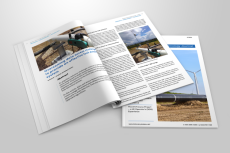
The Enbridge Gas (EG) Ontario network in Canada encompasses over 150,000 km of distribution pipelines and approximately 3,700 km of transmission pipelines. System-wide risk assessments indicate that external and internal corrosion, external interference, and geohazards are some of the most prevalent integrity hazards across the system. EG Ontario...

Unlocking Value: CMI as a Cost‑Saving Complement to IMU ILI Strain Assessments

Unlocking Value: CMI as a Cost‑Saving Complement to IMU ILI Strain Assessments
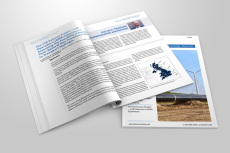
Pipeline curvature and displacement refer to the unintended movement of pipelines from their original positioning, often due to external forces such as soil erosion, seismic activity or landslides. These geo-hazards pose significant risks to the integrity and safety of pipeline systems, potentially leading to leaks, ruptures, and environmental...

Sensor Data Fusion on Small Sats and Airborne Platforms: How Next Gen Technology can help Pipeline and Asset Operators

Sensor Data Fusion on Small Sats and Airborne Platforms: How Next Gen Technology can help Pipeline and Asset Operators
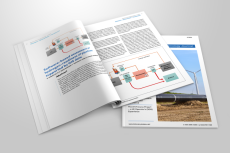
Methane emissions from pipelines and other critical assets pose increasing regulatory, operational, and environmental challenges—particularly given the growing need for rapid, credible leak detection and quantification to meet global standards such as OGMP 2.0 and EU Fit-for-55. This paper introduces AIRMO’s integrated satellite and airborne sensor...

Historical Review & Recent Advancements of On-Line Real-Time Pipeline Leak Detection

Historical Review & Recent Advancements of On-Line Real-Time Pipeline Leak Detection
The advancement of pipeline leak detection has been driven by safety, environmental, regulatory, and technological factors across oil, gas, chemical, and broader pipeline industries. This article reviews the historical progression and recent advancement of on-line real-time pipeline leak detection methods from simple pressure drop analysis, to Real...

An Innovative Approach for On-Bottom Stability Analysis of Subsea Pipelines to Optimize Stabilization Requirements

An Innovative Approach for On-Bottom Stability Analysis of Subsea Pipelines to Optimize Stabilization Requirements
Submarine pipelines are externally concrete coated to ensure vertical and lateral stability on seabed without excessive movement. During operation and especially towards late life and beyond, concrete may be lost which must be compensated in the form of stabilization weights. The weight requirements are typically calculated based on concrete...

Editorial: Selamat datang!

Editorial: Selamat datang!
This year marks a significant milestone for the pipeline community with the inaugural Pipeline Technology Conference Asia (ptc Asia), taking place from 11–13 November 2025 in Kuala Lumpur, Malaysia. ptc Asia promises to be a landmark event, offering a new regional forum for Southeast Asia’s pipeline sector and fostering collaboration among...

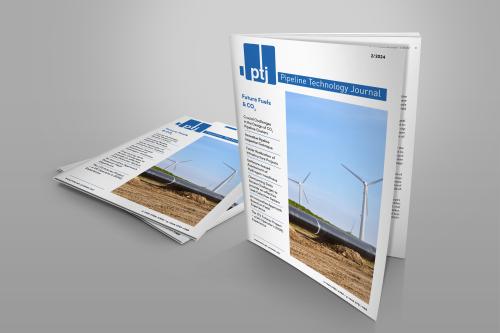
Pipeline Technology Journal 3/2025

This third issue of the Pipeline Technology Journal - ptj in 2025 features a collection of papers on the topic of Offshore & Subsea and their influence in the pipeline industry.


The papers in this issue focus on the following topics:

Halide Brines on Duplex 2205: A Corrosion and Compatibility Investigation

Halide Brines on Duplex 2205: A Corrosion and Compatibility Investigation
The effect of chlorides on metal corrosion has been known for a long time, and continues to be extensively studied in order to adopt the best practices with regard to mitigation. The dominant type of corrosion in the presence of chlorides is pitting corrosion. Bromides on the other hand have not been extensively studied, and – after being proposed...

An Efficient Measure to Mitigate the Response of High-Pressure Gas Pipelines Crossing Potentially Unstable Slopes

An Efficient Measure to Mitigate the Response of High-Pressure Gas Pipelines Crossing Potentially Unstable Slopes
High-pressure gas pipelines often cross potentially unstable slopes under static and/or seismic conditions. Consequently, their structural integrity may be detrimentally affected by Permanent Ground Displacements (PGDs) due to landslides, leading to pipe failures. Since pipeline rerouting is often unfeasible due to various techno-economic...

Rapid Response to Geohazard Threats in a Changing Climate

Rapid Response to Geohazard Threats in a Changing Climate
Most operators are aware of the threat that geohazards present to pipelines routed through hilly terrain or subsidence areas and those at river crossings. A range of management systems and tools is available to investigate and address these risks. Climate change is having an increasing but unpredictable impact on the development of pipeline...

Assesing the Reliability of Rainfall-Related Geohazard Predictions: Can we truly achieve Predictive Management?

Assesing the Reliability of Rainfall-Related Geohazard Predictions: Can we truly achieve Predictive Management?
Over the past decade, CENIT has strengthened its risk-informed approach to managing pipeline geohazards, focusing on early warnings for hydrometeorological threats. With a network of 90 monitoring sensors along pipeline rights-of-way, the system provides near-real-time data on rainfall and river levels, enabling proactive responses. By integrating...

How to optimize Gas Pipeline Operations with Simulation Software and Artificial Intelligence

How to optimize Gas Pipeline Operations with Simulation Software and Artificial Intelligence
Natural gas has been a key energy source for over 200 years, supporting heating, the generation of electricity and manufacturing. While pipelines remain the safest transport method, maintaining gas operations to meet the varying demands of a wide range of customers has become increasingly complex. Access to scalable computing power enables rapid...

Wear Monitoring of Slurry Rubber Hoses using RFID Technology

Wear Monitoring of Slurry Rubber Hoses using RFID Technology
A novel wear monitoring concept using Radio Frequency Identification (RFID) technology has been developed for assessing the condition of slurry rubber hoses. This concept involves embedding RFID tags inside the hose liner, correlating their unique identification numbers with tag location information, and tracking the presence or absence of the tags...

Editorial: Safety & Monitoring

Editorial: Safety & Monitoring
As widely recognized, climate change, particularly the rise in global average temperatures, has significantly impacted rainfall patterns, affecting both the amount and distribution of precipitation across various regions. This has led to a growing frequency of intense rainfall events and extreme weather phenomena, such as floods and landslides...